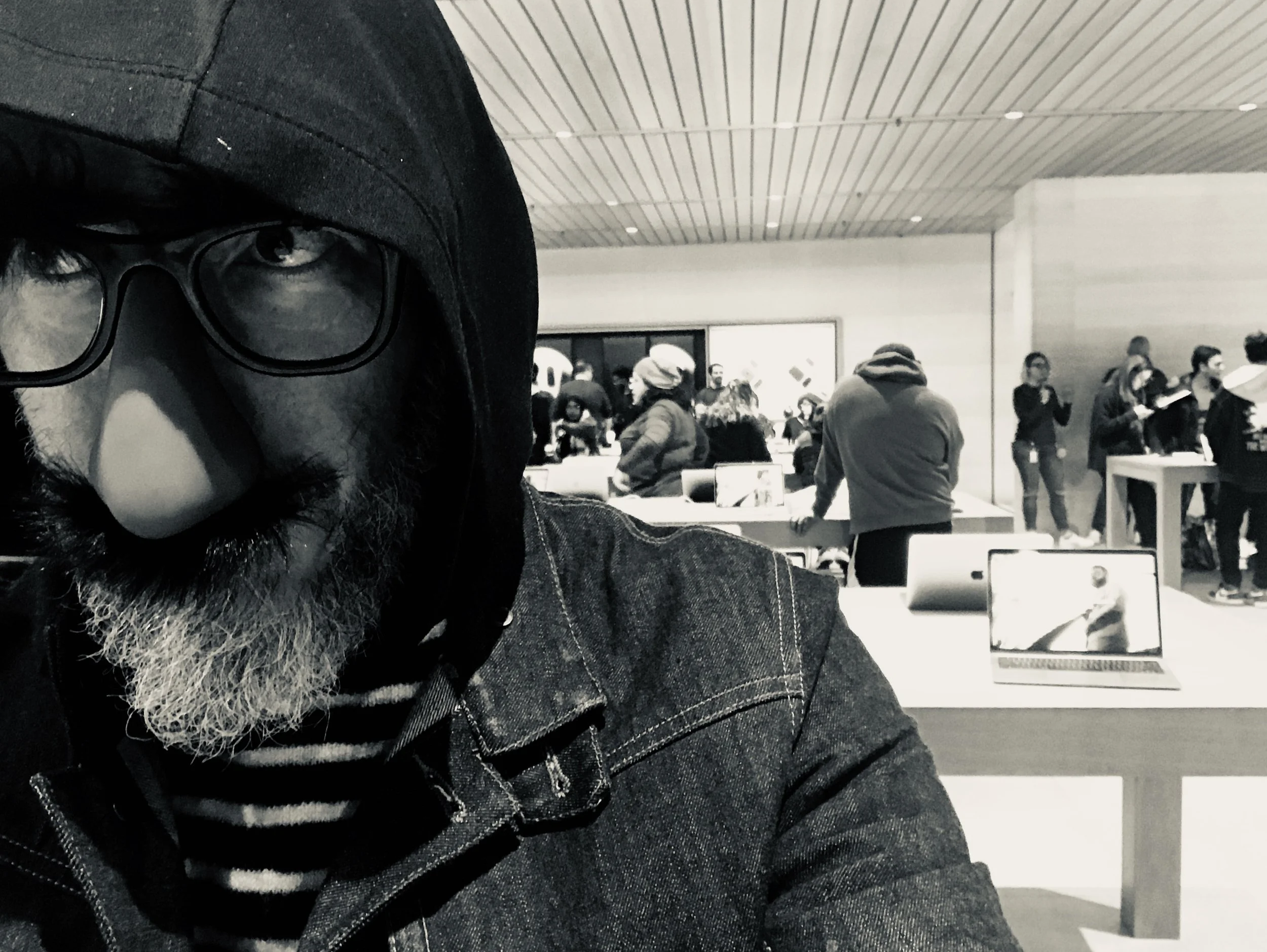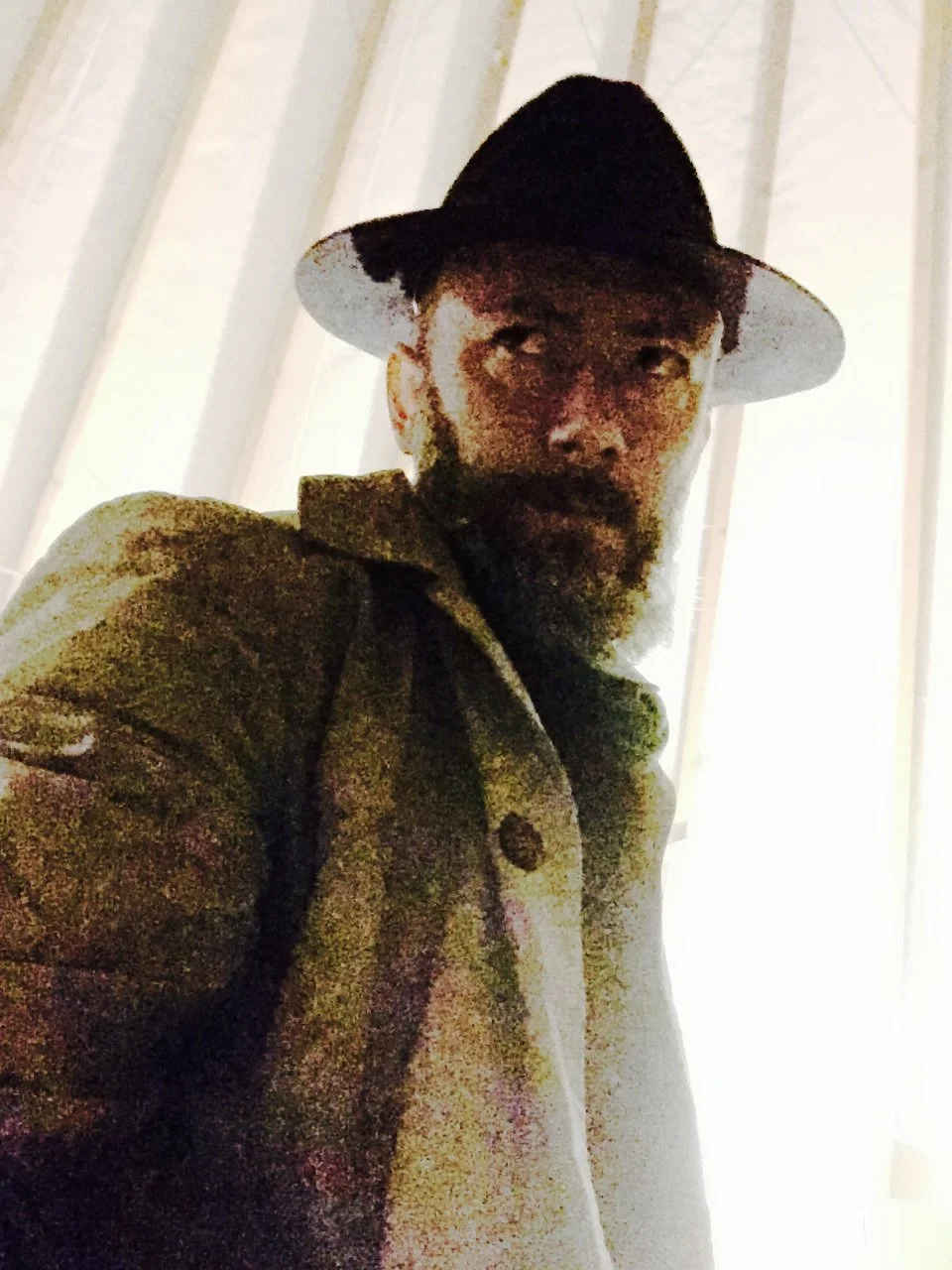

- Artist Bio
Sean Foley was born in New York City in 1976. As a teenager he found his way into the nascent East Coast rave scene, working as a promoter and apprentice lighting director at the Shelter in Tribeca — the venue that hosted NASA, the Friday night party that briefly defined a particular kind of New York intensity before it evolved into something else. Watching light, bodies, and sound break apart and recombine there gave him an early education in how images can both hold a world together and throw it into question.
He graduated from the Rhode Island School of Design in 1998 — after nearly flunking out freshman year and being refused a place in the film and video department — with a painting degree and a stubborn sense that images and stories were inseparable. Richard Merkin — painter, illustrator, Sgt. Pepper dandy — was his graduation advisor. He was among the first students in Duane Slick's painting class, studying under a painter whose work fused Native American oral tradition with the full weight of modernist painting. Julie Mehretu was a graduate teaching assistant in Printmaking — an inspiring presence in the studio whose work ethic he admired. A year after graduation he lived on couches and odd jobs before being hired as a creative hitman at Pseudo.com, Josh Harris's downtown experiment in internet television that burned through $32 million and later declared itself a work of conceptual art.
From 1999 to 2010 he collaborated closely and apprenticed with the filmmaker Raphaël Nadjari — a French-Israeli director of singular instinct whose work moved from Dostoevsky adaptations shot on the streets of New York to deeply interior films made in Tel Aviv and Jerusalem. Foley served as Nadjari's personal assistant, production designer, eventual editor, and post-production specialist in digital cinema — then an emerging technology reshaping how independent films could be made. The collaboration was profound; Nadjari taught him many aspects of filmmaking, dialectical practice, and storytelling from the inside out. Over that decade Foley worked across five fiction features and edited A History of Israeli Cinema, a two-part documentary that received significant critical acclaim in Europe — broadcast on ARTE — and was largely buried in Israel, where its unflinching examination of the country's identity proved too challenging for domestic reception. He also edited Tehilim, selected for the Official Selection at Cannes in 2007 and winner of Best Film at Tokyo Filmex the same year. A decade inside personal storytelling and cinema left a permanent mark on how he thinks about painting. Motion picture gave him a grammar for the serial — the understanding that images in sequence do something no single image can, that repetition and variation are argument.
He married Clara Khoury — Palestinian actress and singular presence in international cinema and theater, working in Arabic, Hebrew, and English across stages and screens from Haifa to Hollywood. She is his partner in building a life from the ground up. Together they disappeared into the mountains of Northern California, learning to live outdoors and homestead while farming cannabis organically. His mentor, Cosmo Knoeber — a multi-generational back-to-the-lander and keeper of traditional methods — taught him how to grow top-grade outdoor cannabis, how to develop land, build a home, and run an honest operation. His comrade in homesteading and art-making during those years was Jocelyn Soubiran — musician and co-founder of Zebulon, the Brooklyn venue that became one of the defining spaces of the New York underground before relocating to Los Angeles. Together they made the video work Peace Piece. In 2012 he attended the Philo School of Herbal Energetics, studying plant medicine with its founder Mary Pat Palmer — herbalist, radio personality, and one of the valley's defining presences.
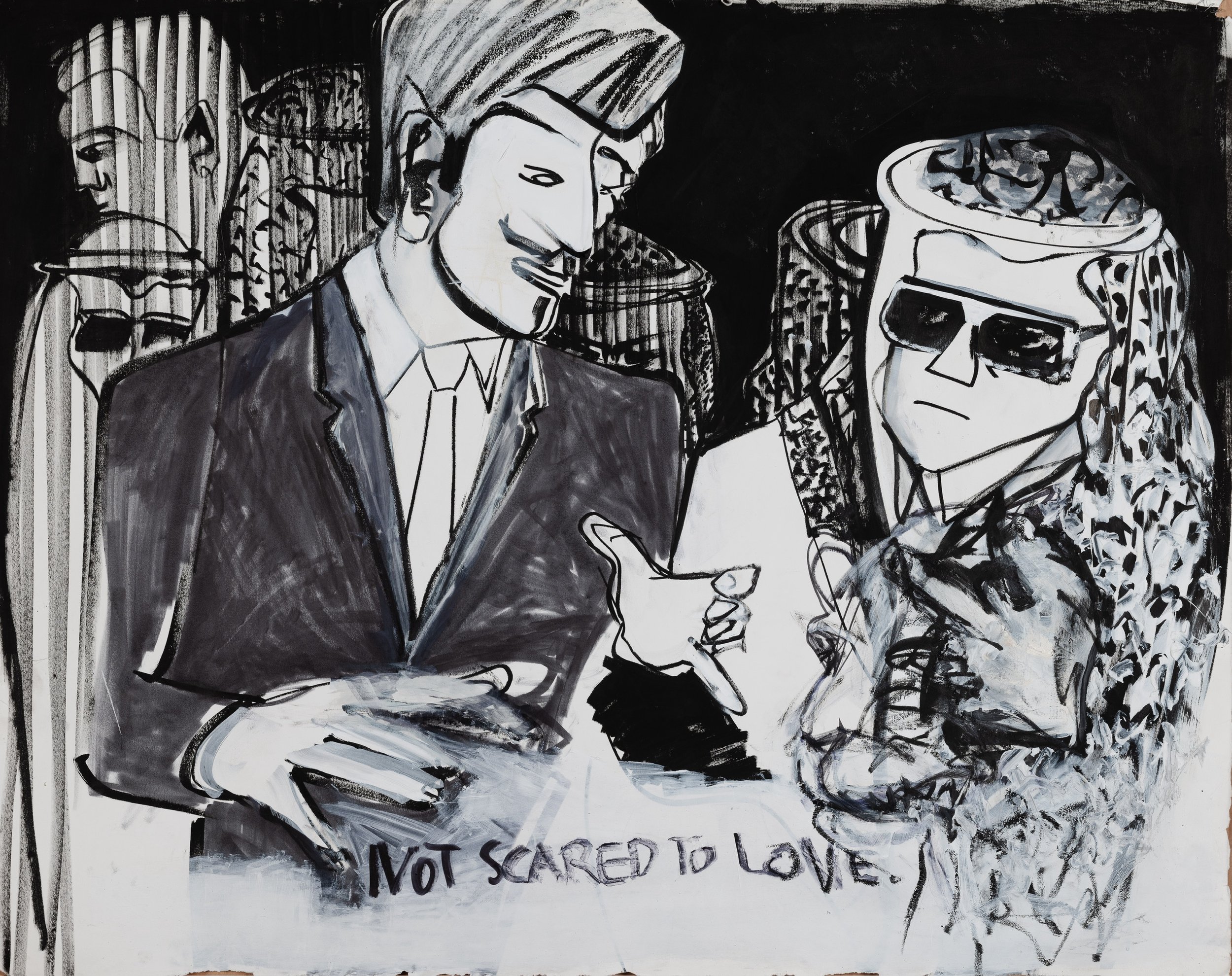
He now makes art in his studio in the woods of Anderson Valley, CA. His paintings and drawings work in the charged territory where figuration has survived its own dissolution — marks that carry the memory of images, images that carry the memory of marks. The territory is familiar from Richter and Polke's destabilization of the image, from Wool and Guyton's interrogation of mark and reproduction, from Mehretu's layered cartographies of historical force — the image under pressure, the mark that reveals and conceals in the same gesture. But Foley's work arrives from a different direction, less concerned with systems than with the moment a recognizable world begins to dissolve at its edges — like the dance floor at the Shelter.